Modern vs Traditional Deck Designs: Which Fits Your Home?
Choosing a deck design is one of the more exciting decisions you can make as a homeowner, but it is also one where getting the details wrong can cost you. The style you choose affects curb appeal, resale value, maintenance demands, and how well the structure holds up to New Jersey's four-season climate.
This guide breaks down the real differences between modern and traditional deck designs, what works best in the Garfield area, and how to decide which direction fits your home and lifestyle.
What Defines a Traditional Deck Design
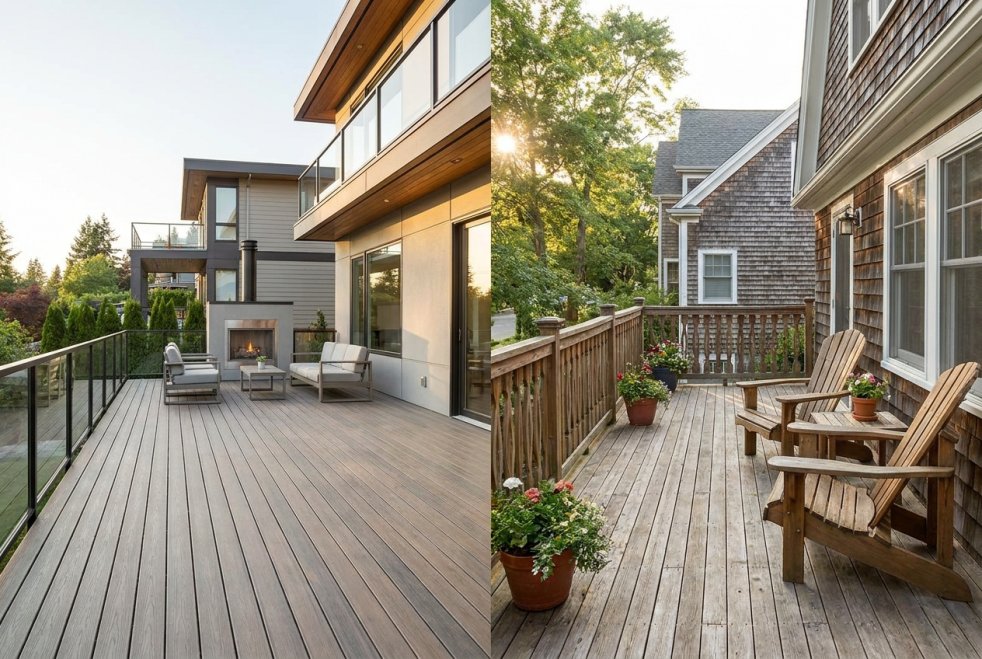
Traditional decks draw from classic American outdoor living. They tend to use pressure-treated wood or cedar, feature warm earth tones, and include familiar design elements like turned balusters, decorative post caps, and built-in benches or planters.
These decks blend naturally with older colonial, craftsman, and Cape Cod-style homes, which are common throughout Bergen County and the surrounding area. They feel approachable and familiar, and they tend to complement landscaping that already has a natural, organic look.
- Materials: pressure-treated lumber, cedar, or redwood
- Railings: wood balusters with classic profiles
- Colors: natural wood tones, stains, or painted finishes
- Details: decorative post caps, lattice skirting, built-in seating
- Best match: colonial, craftsman, cape cod, and ranch-style homes
What Defines a Modern Deck Design
Modern decks prioritize clean lines, minimal ornamentation, and a sleek material palette. You will typically see composite decking, cable or glass panel railings, hidden fasteners, and low-profile framing that creates a seamless connection between indoor and outdoor spaces.
This style suits contemporary homes, newer construction, and properties where the homeowner wants a low-maintenance outdoor space with a polished, architectural feel. Modern decks often incorporate built-in lighting, integrated planters, and multi-level layouts that maximize function.
- Materials: composite decking, aluminum, or hardwoods
- Railings: cable wire, glass panels, or powder-coated metal
- Colors: cool grays, charcoal, black accents, or natural hardwood tones
- Details: hidden fasteners, recessed lighting, clean horizontal lines
- Best match: contemporary, modern farmhouse, and newly built homes
How Garfield's Climate Should Influence Your Choice
Garfield, NJ, sits in a region that sees cold winters, spring rain, humid summers, and freeze-thaw cycles that are hard on outdoor materials. Your deck material and design choice need to account for all of it.
Traditional wood decks require more consistent maintenance in this climate. Without regular sealing, staining, or painting, moisture and temperature swings will cause cracking, warping, and rot faster than homeowners often expect. Cedar and pressure-treated lumber can perform well here, but only with proper upkeep.
Composite decking, which is common in modern designs, handles New Jersey weather with far less maintenance. It resists moisture absorption, does not splinter, and holds its color better over time. For homeowners who want a deck that stays looking sharp without annual refinishing, composite is worth the higher upfront cost.
- Wood decks in NJ need sealing or staining every 1 to 3 years
- Freeze-thaw cycles accelerate cracking in untreated wood
- Composite materials resist moisture, mold, and fading in humid climates
- Cable railings require periodic tension checks after seasonal temperature swings
Matching Your Deck to Your Home's Architecture
The most common mistake homeowners make is choosing a deck style based purely on what looks appealing online, without considering how it connects to the existing structure. A sleek modern deck attached to a 1950s colonial can look disconnected and actually hurt resale value rather than help it.
Walk around your home and look at the roofline, siding material, window trim, and overall proportions. A good deck design should feel like it belongs to the house, not like it was added as an afterthought.
- Older homes with detailed trim work often look best with traditional wood designs
- Newer construction with flat roof lines and large windows suits modern deck styles
- Mixed styles can work when a designer bridges them intentionally with material or color choices
- Neighborhood context matters too, especially if you plan to sell in the near future
Budget and Long-Term Cost Considerations
Traditional wood decks typically cost less up front but require more spending over time. Composite and modern material decks carry a higher initial price, but the reduced maintenance and longer lifespan often make them the better financial decision over a 10 to 15-year horizon.
Factor in not just the build cost, but the cost of staining, repairs, and eventual replacement when comparing options. A quality composite deck installed correctly can last 25 to 30 years with minimal intervention.
What to Do Next
Whether you are drawn to the warmth of a classic wood deck or the clean lines of a modern composite build, the right choice depends on your home's style, your budget, and how much maintenance you are realistically willing to do. Getting an expert opinion before you commit to materials and a layout can save you from costly changes later.
Supreme Pro Decks & Construction works with homeowners throughout Garfield and the surrounding Bergen County area to design and build decks that fit the home, the climate, and the homeowner's goals. We will walk you through your options honestly and help you make a decision that holds up for years.
Call (201) 762-0309 to schedule a consultation and get a clear plan for your deck project.
-Logo.wine.svg)


