

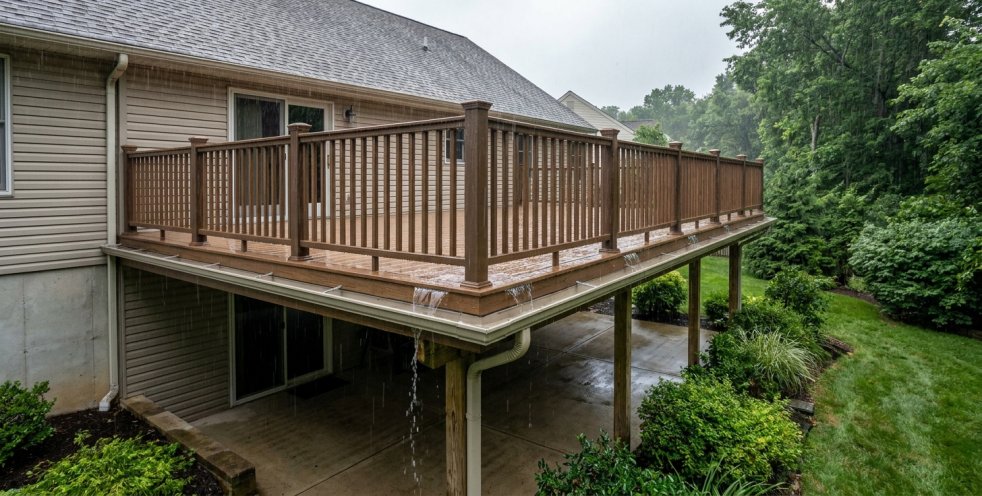
Deck Drainage Matters: Preventing Water Damage During NJ Summer Storms
New Jersey summers hit hard. Between the afternoon thunderstorms, heavy humidity, and the occasional nor'easter that rolls through even in warmer months, decks in the Garfield area take a serious beating from water every single year. Most homeowners do not think about deck drainage until they are already dealing with rot, warped boards, or a flooded patio below.
Understanding how water moves across and under your deck is the first step toward protecting your investment and avoiding expensive repairs down the road.
Why Deck Drainage Is a Bigger Issue in Northern NJ
Garfield and the surrounding Bergen County area average over 46 inches of rainfall per year, with summer storms capable of dropping an inch or more in a single hour. That kind of volume, combined with the freeze-thaw cycles that follow in fall and winter, puts constant stress on deck structures that were not designed with drainage in mind.
Water that pools on a deck surface or collects in the framing below does not just sit there. It works its way into wood fibers, loosens fasteners, and creates the damp conditions that mold and rot need to take hold.
Common Causes of Poor Deck Drainage
Most drainage problems are not random. They trace back to specific design or installation decisions that leave water with nowhere to go.
- Decking boards are installed too tightly together, leaving no gap for water to pass through
- Flat deck framing with no slope to direct water toward the edges
- Ledger boards were installed without proper flashing, allowing water to collect where the deck meets the house
- Debris buildup in gaps and around joists that blocks drainage paths
- Low-clearance decks with poor airflow underneath, trapping moisture against the framing
- No drainage system is installed beneath the deck to redirect water away from the foundation
Any one of these issues can cause problems on its own. When several exist together, the damage compounds quickly.
Warning Signs Your Deck Has a Drainage Problem
Drainage issues tend to show up gradually, which is why they get ignored until the damage is already significant. Watch for these signs after heavy rain or at the start of each season.
- Standing water on the deck surface that does not clear within an hour of the rain stopping
- Dark staining or discoloration along the edges of deck boards
- Soft or spongy spots when you walk across the deck
- Visible mold or mildew growth on the surface or underneath the structure
- Rust streaking around fasteners or connectors
- Water stains or moisture damage on the siding or rim joist where the deck attaches to the house
- Pooling water or erosion in the soil directly beneath or around the deck
Soft spots and ledger-area staining are the most urgent. Those indicate structural moisture has already set in, and the framing may be compromised.
What Happens When Drainage Problems Go Unaddressed
Ignoring a drainage issue does not make it cheaper to fix later. It makes it significantly more expensive.
- Deck boards rot and require full replacement rather than spot repair
- Joists and beams absorb moisture and lose structural strength over time
- Ledger board rot can compromise the connection between the deck and the house, creating a safety hazard
- Moisture migrates into the house framing and exterior walls, leading to interior damage
- Mold growth spreads to adjacent surfaces and becomes a health concern
A deck that needed a drainage correction for a few hundred dollars can turn into a full rebuild if the problem is left unaddressed through two or three wet seasons.
Practical Steps to Improve Deck Drainage
Some drainage improvements are straightforward maintenance tasks. Others require professional work to be done correctly.
- Clear debris from between deck boards and around the base of the structure at least twice a year
- Inspect and reseal any gaps where the ledger meets the house siding
- Confirm that gutters and downspouts are directing water away from the deck area, not toward it
- Consider a deck drainage system installed beneath the boards if you have a second-story deck over a living space or patio
- Make sure the grade of the soil around the deck slopes away from the foundation
If your deck is more than a few years old and was not built with drainage in mind, a professional assessment can identify exactly where water is collecting and what corrections make the most sense.
What to Look for in a Deck Drainage Solution
Not every drainage fix is the same. The right approach depends on your deck's height, the framing material, how it connects to the house, and whether you want the space underneath to be usable.
Under-deck drainage systems that channel water through a trough-and-gutter setup are a popular option for elevated decks. For ground-level decks, the focus is usually on board spacing, proper slope, and keeping the area underneath clear for airflow. Composite decking materials with built-in drainage channels are also worth considering for replacements or new builds.
Get Ahead of the Next Storm
Summer storms in NJ are not going to get lighter. The best time to address a drainage issue is before the next heavy rain, not after it has already done more damage.
Supreme Pro Decks & Construction works with homeowners throughout Garfield and the surrounding area on deck inspections, drainage corrections, and full deck builds designed to handle what NJ weather delivers. We know the regional conditions, and we build and repair to last in them.
Call (201) 762-0309 to schedule an inspection and find out exactly what your deck needs before storm season peaks.
-Logo.wine.svg)


