

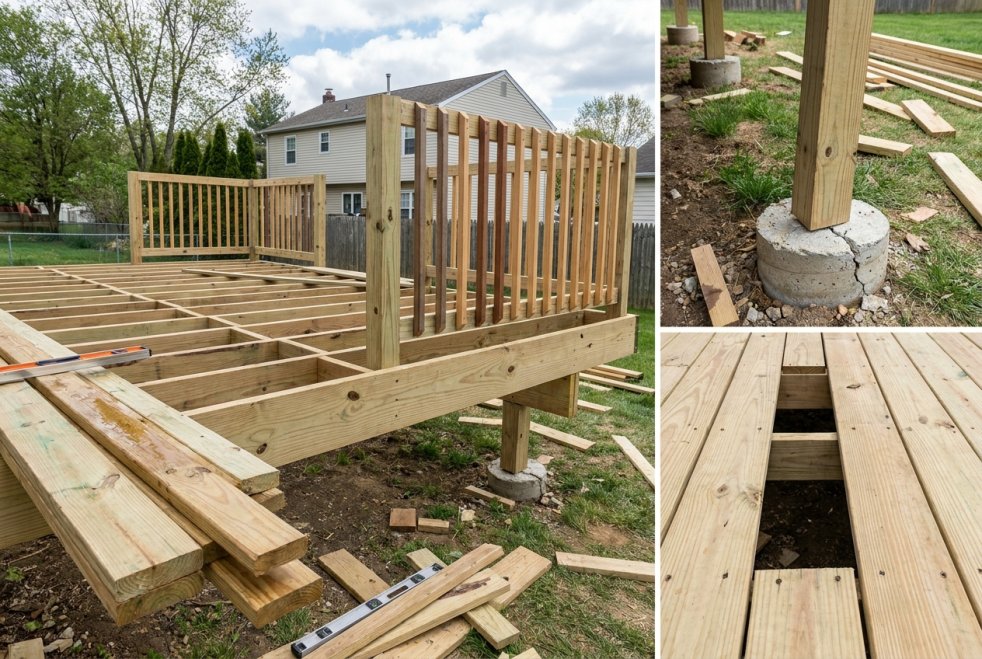
5 Biggest Deck Building Mistakes NJ Homeowners Make
Building a deck is one of the best investments you can make in your home. But in New Jersey, where the climate swings from humid summers to freezing winters, a poorly planned deck can become a costly problem fast. These are the five mistakes we see most often, and what you should do instead.
1. Skipping the Permit Process
In New Jersey, most decks require a building permit before construction begins. Garfield and surrounding Bergen County municipalities enforce local zoning rules that govern setbacks, height limits, and structural requirements. Skipping this step is one of the most expensive shortcuts a homeowner can take.
An un-permitted deck can complicate your home sale, trigger fines, or require a full teardown. Always pull the permit before the first post goes in the ground.
- Contact your local building department before starting any deck project
- Verify setback requirements from property lines and structures
- Confirm your contractor is licensed and familiar with NJ code requirements
2. Using the Wrong Materials for the NJ Climate
New Jersey weather is hard on outdoor structures. Freeze-thaw cycles, spring rain, summer humidity, and road salt near urban areas like Garfield all accelerate material breakdown. Choosing materials based on upfront cost alone often leads to premature warping, rot, and fastener failure.
Pressure-treated lumber is a solid baseline, but it needs to be rated correctly for ground contact where applicable. Composite decking is a popular upgrade because it handles moisture and UV exposure far better than untreated wood.
- Use ground-contact rated lumber for posts and ledger boards
- Consider composite decking for lower long-term maintenance
- Choose stainless or hot-dipped galvanized fasteners to prevent rust staining
3. Poor Footing and Foundation Design
In NJ, footings must extend below the frost line, which is typically 36 to 42 inches deep in Bergen County. Footings that are too shallow will heave during winter freeze cycles, causing the deck to shift, crack, or pull away from the house over time.
This is a structural issue, not a cosmetic one. A deck that moves can stress the ledger connection to your home and create serious safety risks. Getting the foundation right is not a place to cut corners.
- Footings must reach below the local frost line depth
- Concrete tube forms should be sized for the load they carry
- Post bases should elevate lumber off the concrete to prevent moisture contact
4. Improper Ledger Board Attachment
The ledger board is the piece that connects your deck to your house. When it is improperly flashed or fastened, water gets behind it and causes rot in your home's rim joist, siding, and framing. This damage is often hidden for years before it becomes visible.
Ledger failures are also one of the leading causes of deck collapses. NJ building code specifies exact fastener patterns and flashing requirements for a reason. A properly installed ledger with adequate waterproofing tape and flashing is non-negotiable.
- Use approved lag screws or through-bolts at code-required spacing
- Install self-adhesive flashing tape behind the ledger before mounting
- Never attach a ledger to stucco, EIFS, or manufactured siding without proper standoffs
5. Underestimating Railing and Stair Code Requirements
Railings and stairs are where many DIY and low-bid projects fall short. NJ code requires railings on decks 30 inches or more above grade, with specific height minimums and baluster spacing to prevent children from slipping through. Stairs have their own rise, run, and handrail requirements.
Beyond code compliance, poorly built railings are a liability. A guest leaning on a loose railing or tripping on an uneven stair tread creates real risk. These details matter both for safety and for passing your final inspection.
- Railings must be at least 36 inches high for decks under 30 feet, 42 inches above that
- Baluster spacing cannot exceed 4 inches
- Stair handrails must be graspable and continuous
What to Do Before You Start Your Deck Project
A well-built deck adds real value to your home and lasts for decades when it is done correctly. The mistakes above are all preventable with proper planning and an experienced contractor who knows New Jersey code and climate conditions.
- Get a site evaluation before committing to a design or budget
- Confirm your contractor pulls permits and follows local code
- Ask about material options suited to NJ weather conditions
- Review the plan for footings, ledger attachment, and railing details before work begins
Supreme Pro Decks & Construction has the local experience to build decks that hold up to Bergen County winters, pass NJ inspections, and look great for years to come. We handle every detail from permits to the final walkthrough.
Ready to get started or have questions about your project? Call (201) 762-0309 to schedule a consultation with our team today.
-Logo.wine.svg)


