

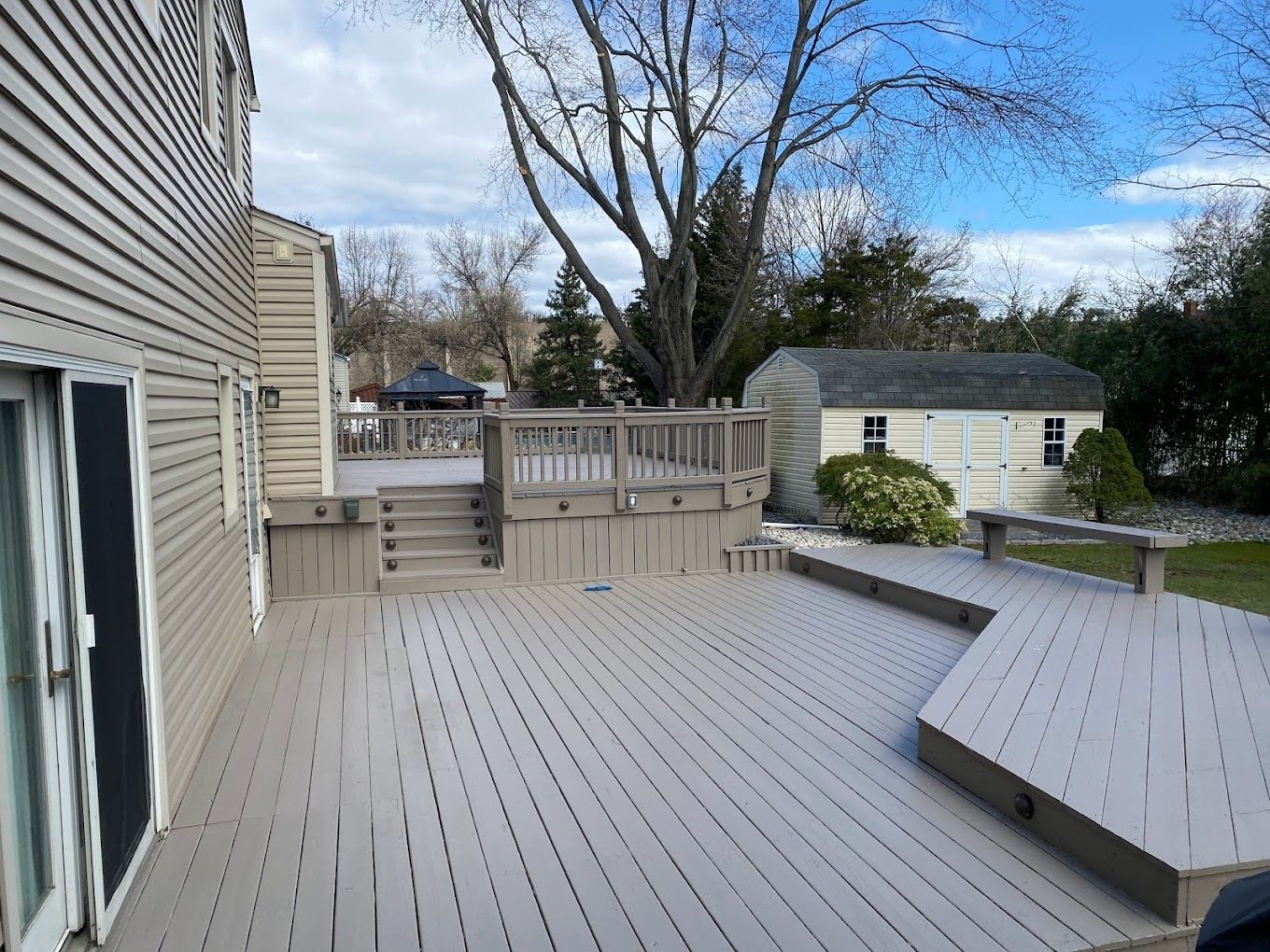
Wood vs Composite Decking in Cold Weather: What Performs Better in NJ?
If you live in Newark or anywhere in North Jersey, you know winter is no joke. Snow, ice, freezing rain, and constant freeze-thaw cycles can do serious damage to outdoor structures.
When planning deck building and installation, one of the biggest decisions homeowners face is wood vs composite. Both can look great. Both can add value. But in New Jersey’s cold, wet climate, performance matters more than appearance alone.
Here is what you need to know before you request a quote.
How Newark’s Climate Impacts Your Deck
North Jersey decks deal with:
-
Heavy snow loads
-
Ice buildup
-
Repeated freeze-thaw cycles
-
High winter moisture
-
Humid summers after harsh winters
The biggest issue is the freeze-thaw cycle. Water seeps into small cracks. Temperatures drop. The water freezes and expands. Materials swell, split, and weaken over time.
If your deck is not built with the right materials and proper installation methods, winter will expose every flaw.
That is why smart deck building and installation in NJ starts with understanding material performance in cold weather.
Wood Deck Building in Cold Weather
Wood deck building has been the standard for decades. Pressure-treated lumber, cedar, and redwood are common choices in New Jersey.
But wood is naturally porous. That matters in winter.
Causes of cold-weather damage to wood decks:
-
Moisture absorption from snow and ice
-
Expansion and contraction during temperature swings
-
Surface cracking from freeze-thaw cycles
-
Salt damage from deicing products
Warning signs to watch for:
-
Splitting or cracked boards
-
Raised nails or popped fasteners
-
Soft or spongy areas
-
Peeling stain or sealant
-
Rot near stairs and rail posts
Risks of ignoring these signs:
-
Structural weakening of joists and framing
-
Trip hazards
-
Costly board replacements
-
Premature full deck replacement
Wood decks require:
-
Annual sealing or staining
-
Regular inspections
-
Prompt board replacement when damaged
In Newark’s climate, wood can perform well if maintained aggressively. But if maintenance slips, winter accelerates deterioration fast.
Composite Deck Building in Cold Weather
Composite deck building uses a blend of recycled wood fibers and plastics. The boards are engineered to resist moisture better than traditional lumber.
This makes a big difference in a freeze-thaw climate like New Jersey.
Why composite handles winter better:
-
Lower moisture absorption
-
Minimal expansion and contraction
-
No rot or insect damage
-
Hidden fastener systems reduce water entry points
Common misconceptions:
-
Composite does not crack like wood
-
It does not require staining or sealing
-
It resists salt damage better than natural wood
That said, the composite is not indestructible.
Potential cold weather considerations:
-
Can become slightly more brittle in extreme cold
-
The surface can be slippery if the snow is not cleared
-
Substructure framing still needs proper protection
When properly installed, composite deck building typically outperforms wood in Newark winters with less long-term maintenance.
Cost vs Long Term Performance in NJ
Wood deck building usually has a lower upfront cost. That attracts many homeowners.
But consider the long-term factors:
Wood:
-
Lower initial investment
-
Ongoing maintenance costs
-
Higher likelihood of board replacement
-
Shorter lifespan in harsh climates
Composite:
-
Higher initial cost
-
Minimal maintenance
-
Longer lifespan
-
More stable performance through freeze-thaw cycles
In North Jersey, where winter is intense year after year, composite often delivers better long-term value.
The key is professional deck building and installation that accounts for drainage, spacing, flashing, and proper joist protection.
Structural Issues Most Homeowners Miss
Material choice is only part of the equation. Winter damage often starts below the surface.
Common structural causes of failure:
-
Improper joist spacing
-
Poor ledger board attachment
-
No flashing against the home
-
Inadequate drainage under the deck
-
Untreated framing lumber
Warning signs of structural problems:
-
Deck pulling away from the house
-
Bouncy or sagging areas
-
Rusted hardware
-
Loose railings
In Newark, building codes are strict for a reason. Snow load and moisture demand precise installation methods.
A poorly installed composite deck can fail just like a poorly installed wood deck.
So What Performs Better in NJ?
For most Newark homeowners, composite deck building performs better in cold weather due to:
-
Superior moisture resistance
-
Reduced cracking and splitting
-
Lower maintenance demands
-
Longer service life
Wood deck building can still be a solid option if:
-
You are committed to yearly maintenance
-
You prefer the natural wood look
-
Budget is a primary concern
The real winner is not just the material. It is expert deck building and installation designed specifically for New Jersey’s climate.
What To Do Next
If your current deck is showing winter damage:
-
Schedule a professional inspection
-
Check framing, ledger boards, and fasteners
-
Address small cracks before they spread
-
Replace rotted boards immediately
If you are planning a new deck:
-
Compare lifetime cost, not just upfront price
-
Ask about freeze-thaw protection methods
-
Confirm compliance with Newark building codes
-
Choose materials rated for cold climates
At Supreme Pro Decks & Construction, we design every deck around North Jersey weather patterns. Whether you are considering wood deck building or composite deck building, we build for durability, safety, and long-term performance.
Ready to build a deck that survives Newark winters?
Call Supreme Pro Decks & Construction at (201) 762-0309 today to schedule your consultation and get a detailed quote for professional deck building and installation.
-Logo.wine.svg)


