Covered Deck vs Open Deck: What Works Best in NJ?
Choosing between a covered deck and an open deck is one of the first decisions homeowners face when planning an outdoor living space in New Jersey. Both options have real advantages, but the right choice depends on your climate, how you plan to use the space, and what you want to get out of the investment.
Garfield, NJ, gets the full range of Northeast weather: hot and humid summers, heavy spring rain, cold winters, and everything in between. That climate shapes which deck type performs better and holds up longer over time.
What Is the Difference Between a Covered and Open Deck?
An open deck is a standard outdoor platform with no overhead structure. It gives you full sun exposure, unobstructed views, and a clean, minimal look that works well with many home styles.
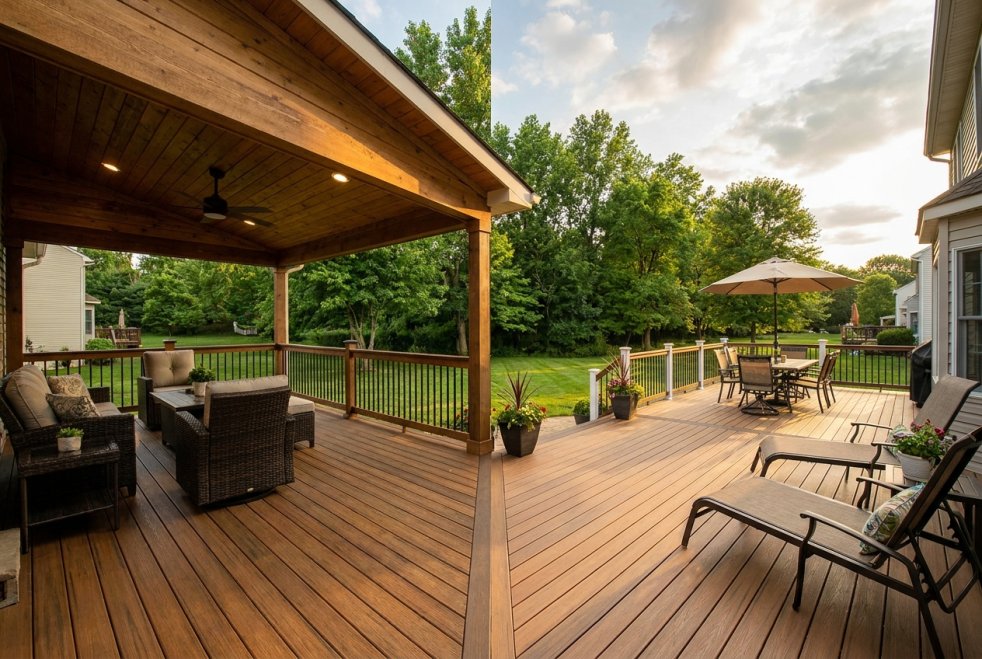
A covered deck adds a roof structure overhead, which can range from a simple pergola with partial coverage to a fully enclosed roof that keeps out rain entirely. The coverage level changes how the space functions throughout the year.
How New Jersey's Climate Affects Your Choice
Garfield and the surrounding Bergen County area see around 47 inches of rain per year, with humid summers and winters that bring freezing temperatures and occasional snow. That weather pattern puts real stress on outdoor structures and affects how usable each deck type is across the seasons.
- Open decks are fully exposed to UV rays, which fade finishes and dry out wood faster in summer
- Rain and pooling water accelerate wear on decking boards, fasteners, and framing without any overhead protection
- Covered decks shed water away from the surface, which extends the life of the decking material underneath
- Snow load is a factor for covered structures and needs to be accounted for in the roof design
- Humidity in NJ summers can make an uncovered deck feel less comfortable during peak heat
In short, NJ weather is harder on open decks over time, but a covered deck requires a properly engineered structure to handle snow and wind loads safely.
Advantages of an Open Deck in NJ
Open decks are simpler to build, typically cost less upfront, and give you maximum flexibility in terms of layout and design. They work especially well for homeowners who prioritize sunbathing, stargazing, or an unobstructed connection to the yard.
- Lower initial construction cost
- Easier to permit and build in most NJ municipalities
- Full sun access for gardening, lounging, or solar heating
- Cleaner sight lines and a more open feel
- Easier to expand or modify later
The trade off is that an open deck gives you less usable time in bad weather, and the surface materials take more of a beating from direct exposure year-round.
Advantages of a Covered Deck in NJ
A covered deck extends the season significantly. You can use the space during light rain, avoid the worst of the summer afternoon sun, and keep outdoor furniture in better condition longer. For homeowners who want the deck to function more like an outdoor room, a covered structure makes that possible.
- Usable during rain and in direct summer sun without discomfort
- Protects the deck surface from UV damage and standing water
- Allows for ceiling fans, lighting, and outdoor heaters that extend use into fall
- Adds visual definition and a more finished look to the outdoor space
- Can increase home value when built and permitted correctly
The added cost and structural requirements are real considerations, but for many NJ homeowners, the increased usability justifies the investment.
What to Watch Out for With Each Option
Open decks in NJ need to be built with materials that can handle constant moisture exposure. Pressure-treated lumber, composite decking, or hardwoods with proper sealing are the right choices. Skipping proper drainage design leads to water sitting on the surface and working into the framing.
Covered decks require attention to the roof structure itself. In NJ, the roof must be designed to handle snow accumulation, which adds load that a lightweight pergola cannot always support. Flashing details where the covered deck connects to the house are also critical. A poorly flashed ledger connection is one of the most common causes of water intrusion into the home.
- Open decks: prioritize drainage, material selection, and regular sealing or staining
- Covered decks: require proper structural engineering, snow load design, and correct flashing at the house connection
- Both options need permits in most NJ municipalities, so check with your local building department before starting
Which Option Is Right for You?
If your priority is cost and simplicity, and you mostly want the deck for warm, dry days, an open deck is a practical choice. If you want a space you can use through spring rain, hot summer afternoons, and cool fall evenings, a covered deck gives you that flexibility and protects your investment at the same time.
For most homeowners in the Garfield area who want to get real use out of their outdoor space throughout the year, a covered deck tends to deliver more value over time. The key is building it right from the start, with proper materials, correct structural design, and permits pulled before construction begins.
Talk to a Local Expert Before You Decide
Supreme Pro Decks & Construction works with homeowners throughout Garfield and Bergen County on deck building, design, construction, and roofing details that hold up in New Jersey's climate. We can walk you through both options, help you understand what your property and budget support, and build a structure that is done right the first time.
Call (201) 762-0309 to schedule a consultation and get a clear picture of what your project will involve before any work begins.
-Logo.wine.svg)


