

Are Composite Decks Really Maintenance-Free? What NJ Homeowners Should Know
Composite decking gets sold as the low-maintenance alternative to wood, and in many ways, that reputation is earned. But low-maintenance is not the same as no-maintenance, and homeowners in Garfield, NJ who expect to install composite decking and never think about it again are often surprised by what they find a few years down the road.
Here is an honest look at what composite decks actually require, what can go wrong, and how to protect your investment in our region's climate.
What "Low-Maintenance" Actually Means for Composite Decking
Composite decking is made from a blend of wood fibers and plastic materials, sometimes with a protective polymer cap layer on higher-end products. It does not need staining, sealing, or sanding the way pressure-treated wood does. That alone saves a meaningful amount of time and money over the life of the deck.
But the structure still sits outside, exposed to rain, humidity, temperature swings, and organic debris. Those conditions require attention regardless of what the decking surface is made of.
What New Jersey's Climate Does to Composite Decks
Garfield and the surrounding Bergen County area experience a full range of seasonal stress. Winters bring freeze-thaw cycles that can affect fasteners, framing, and any moisture that has worked its way into gaps. Summers bring humidity and heat that can cause composite boards to expand noticeably.
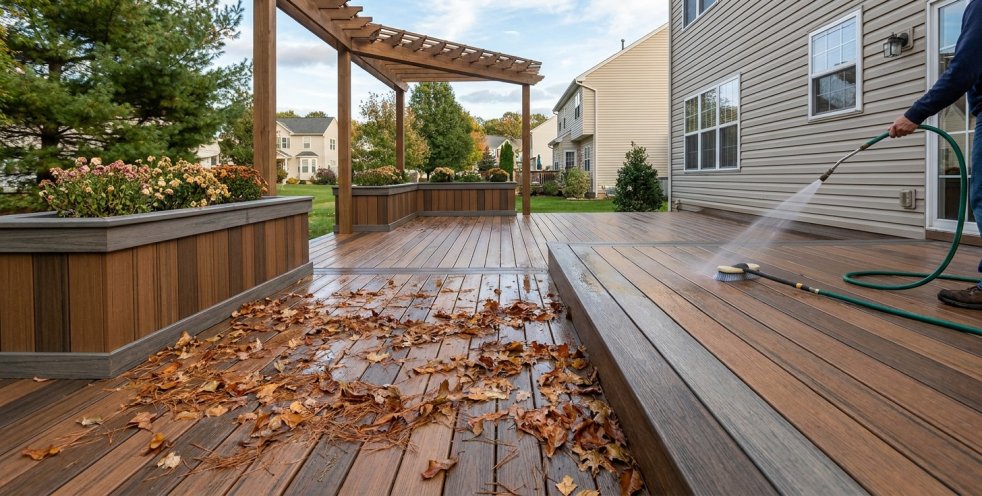
Fall is especially hard on composite surfaces. Wet leaves sitting on the deck for weeks create conditions that promote mold and mildew growth, and certain leaves can stain lighter-colored composite boards if left long enough.
- Freeze-thaw cycles stress fasteners and the subframe beneath the decking
- High summer humidity promotes mold and mildew in shaded or low-airflow areas
- Wet leaves and organic debris stain composite surfaces and trap moisture
- Thermal expansion from heat can cause boards to shift or gap unevenly
- Snow removal with metal tools can scratch or gouge the surface cap layer
Common Maintenance Tasks Composite Decks Still Require
Even the best composite product on the market needs routine care to perform well. Skipping these steps leads to cosmetic damage, structural issues, and shortened lifespan.
- Sweeping debris regularly, especially in the fall, to prevent staining and moisture retention
- Washing the surface two to four times per year with a composite-safe cleaner and a soft brush
- Clearing snow with a plastic shovel to avoid surface scratches
- Inspecting the subframe and ledger board annually for rot, corrosion, or shifting
- Checking fasteners and hardware for rust or loosening, especially after winter
- Keeping plant containers elevated so that standing water does not sit against the boards
The subframe deserves special attention. Most composite decking is installed over a wood frame, and that frame is just as vulnerable to moisture and rot as any other outdoor wood structure. A beautiful composite surface sitting on a deteriorating frame is a safety hazard.
Warning Signs Your Composite Deck Needs Attention
Catching problems early keeps repair costs manageable. Watch for these signs and do not assume they will resolve on their own.
- Mold or mildew staining that does not come clean with regular washing
- Boards that feel soft, spongy, or flex more than they used to underfoot
- Visible gaps or warping in the board layout
- Rust stains around fastener locations
- Loose railings or wobbly post bases
- Discoloration or fading that is uneven across the surface
- Any movement or bounce in the deck frame when walking on it
Soft spots in the decking surface almost always mean moisture has reached the subframe. That is not a cosmetic issue. It is a structural one that needs to be addressed before it becomes a safety risk.
Capped vs. Uncapped Composite: Does It Change the Maintenance Needs?
Capped composite boards have a protective polymer shell that resists staining, fading, and moisture absorption better than uncapped products. They are easier to clean and hold up better against the kind of wet, leaf-covered falls we see in northern New Jersey.
Uncapped composite is more affordable upfront but requires more diligent cleaning and is more susceptible to mold growth and staining over time. If you are choosing a product for a shaded deck or one that stays damp for extended periods, the upgrade to a capped product is worth the cost.
What to Do Before Each Season
A quick seasonal checklist goes a long way toward keeping your composite deck in good shape year after year.
- Spring: Wash the full surface, inspect the frame and hardware, check for winter damage
- Summer: Keep the surface clear of debris, check for board movement from heat expansion
- Fall: Remove leaves frequently, apply a composite-approved cleaner before winter
- Winter: Use a plastic shovel for snow removal, and avoid ice melt products with harsh chemicals
When to Call a Professional
Routine cleaning is something most homeowners can handle. But structural concerns, board replacement, railing repairs, and ledger issues are jobs for a qualified contractor. Attempting to fix subframe rot or reattach a ledger board without the right knowledge can create bigger problems than the original issue.
Supreme Pro Decks & Construction builds and repairs composite decks throughout the Garfield area and understands exactly what our local climate demands from outdoor structures. If your deck is showing signs of wear, structural movement, or you are thinking about a new installation, we can give you a straight assessment and a plan that holds up.
Call (201) 762-0309 to schedule a consultation and find out what your deck actually needs.
-Logo.wine.svg)


