

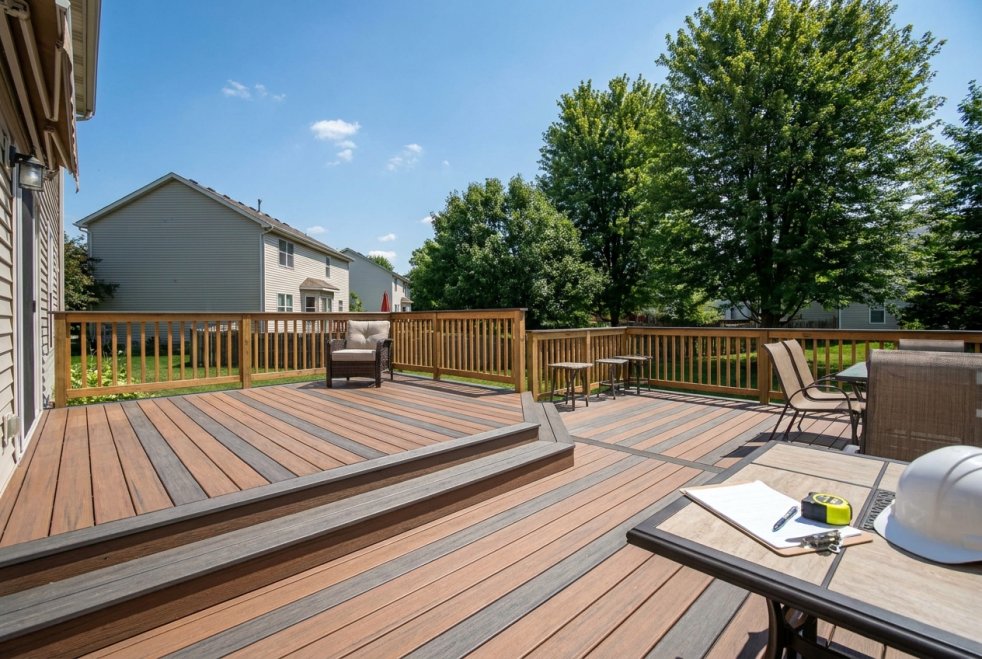
Is Composite Decking Worth the Higher Upfront Cost in NJ?
If you have been pricing out a new deck in New Jersey, you already know composite decking costs significantly more than pressure-treated wood upfront. For many homeowners in Garfield and the surrounding Bergen County area, that price gap raises a fair question: Is it actually worth it?
The honest answer depends on how long you plan to stay in your home, how much maintenance you are willing to do, and how our local climate factors into the equation. Here is a straightforward breakdown to help you decide.
What Makes Composite Decking More Expensive
Composite decking is manufactured from a blend of wood fibers and recycled plastic. That process produces a material that resists moisture, insects, and UV damage far better than natural wood. The raw materials and manufacturing costs are higher, and that gets passed along to you at purchase.
On average, composite decking materials run two to three times the cost of pressure-treated lumber per square foot. For a mid-size deck, that difference can add up to several thousand dollars before labor is even factored in.
How New Jersey's Climate Affects Your Deck Material Choice
Garfield sits in a climate zone that delivers real punishment to outdoor structures. Summers bring heat and humidity. Winters bring freezing temperatures, ice, and snow loads. Spring and fall bring repeated freeze-thaw cycles that are especially hard on wood.
Here is what that means in practical terms for deck materials:
- Pressure-treated wood absorbs moisture, which leads to warping, cracking, and splintering over time
- Freeze-thaw cycles accelerate wood movement and can loosen fasteners and boards
- Humidity promotes mold and mildew growth on wood surfaces
- UV exposure causes wood to gray and degrade without regular sealing
- Composite materials hold their shape and color through temperature swings much better than wood
In a mild climate, the case for composite is less compelling. In New Jersey, the climate does a lot of the arguing for you.
The Real Cost Comparison Over Time
Upfront cost is only part of the picture. Maintenance costs over the life of the deck tell a different story.
A pressure-treated wood deck requires sanding and resealing or staining every one to three years to stay in good condition. Skip that maintenance, and you are looking at boards that crack, splinter, and rot well before their expected lifespan. A composite deck needs occasional cleaning with soap and water and very little else.
Here is a rough comparison over a 25-year period for a typical deck in our area:
- Wood deck: lower install cost, but recurring staining, sealing, board replacement, and potential structural repairs add up significantly
- Composite deck: higher install cost, but minimal ongoing maintenance and a lifespan that often exceeds 25 to 30 years with proper installation
- Most homeowners find composite reaches cost parity with wood within 8 to 12 years when maintenance is factored in
When Composite Decking Makes the Most Sense
Composite is not the right choice in every situation, but it is the stronger choice in many of them. Consider it seriously if any of these apply to you:
- You plan to stay in your home for 10 or more years
- You want a low-maintenance outdoor space without seasonal upkeep
- Your deck will get heavy use from kids, pets, or frequent entertaining
- You want consistent color and appearance without fading or graying
- You are building near water, a pool, or in a shaded area prone to moisture
If you are planning to sell in the next few years or working with a tight budget, pressure-treated wood with a quality finish can still be a solid option. The key is going in with realistic expectations about what it will take to maintain it in a New Jersey climate.
What to Watch Out For With Composite Decking
Not all composite products are equal. Lower-end composites can still fade, stain from mold, or scratch more easily than advertised. Here are a few things to keep in mind:
- Look for capped composite boards, which have a protective polymer shell on all four sides for better moisture and stain resistance
- Ask about the warranty; reputable brands offer 25-year or lifetime warranties on fading and staining
- Make sure your substructure (joists and framing) is properly built, and composite boards need adequate support to prevent flex and bounce underfoot
- A cheap composite installed poorly will disappoint, regardless of the material's potential
What to Do Next
If you are weighing composite versus wood for your next deck project, the best move is to talk through the specifics with a contractor who knows what holds up in this region. Material choice matters, but so does proper installation, substructure design, and drainage planning.
Supreme Pro Decks & Construction works with homeowners throughout Garfield and Bergen County on deck builds that are designed for the way we actually live here, four real seasons and all. We can walk you through material options, give you an honest cost comparison for your specific project, and help you make a decision that fits your budget and your long-term goals.
Call (201) 762-0309 to schedule a consultation and get a clear picture of what your deck project will actually cost and last.
-Logo.wine.svg)


