

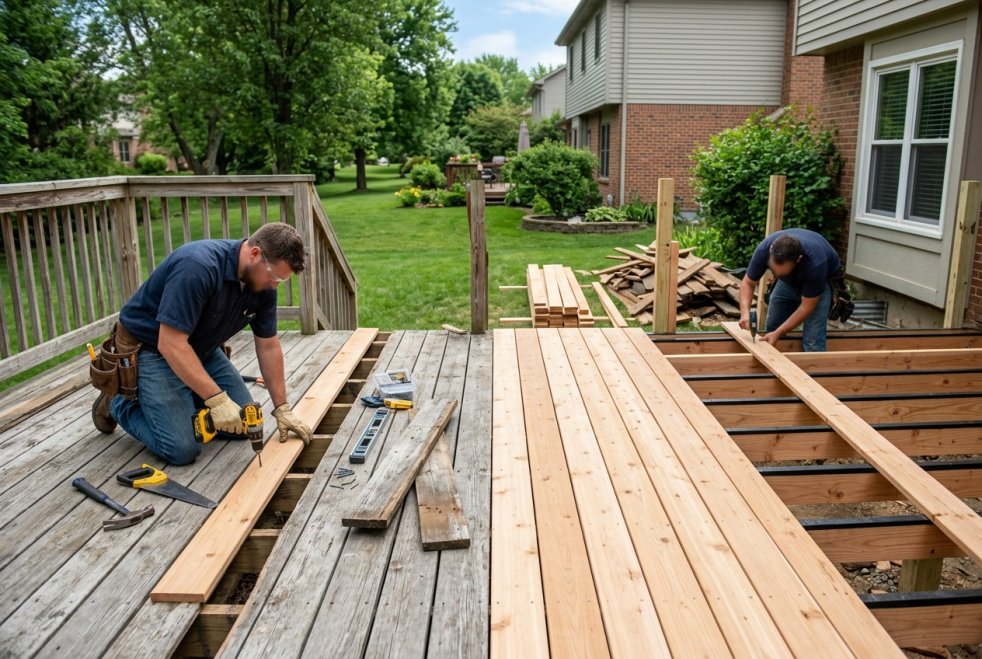
Deck Replacement vs Repair: Which Saves More Money Long-Term?
If your deck is showing its age, you are probably weighing two options: patch it up or tear it down and start fresh. The answer is not always obvious, and making the wrong call can cost you significantly more in the long run. Here is a straightforward breakdown to help you decide.
Why the New Jersey Climate Makes This Decision More Urgent
Garfield and the surrounding Bergen County area experience harsh winters, heavy spring rain, and humid summers. That combination accelerates wood rot, fastener corrosion, and structural weakening faster than in milder climates.
Freeze-thaw cycles in particular are brutal on deck boards and framing. Water seeps into the wood grain, freezes, expands, and causes splits that grow larger every season. What looks like surface wear in October can become a structural problem by March.
Common Causes of Deck Deterioration
Understanding why your deck is failing helps determine the right fix. Most damage in this region comes from a few predictable sources.
- Moisture infiltration from rain, snow, and ice
- UV exposure that dries out and cracks wood over time
- Corroded or loose fasteners that compromise structural connections
- Insect damage, particularly from carpenter ants and termites
- Original construction with low-grade or untreated lumber
- Poor drainage design that traps water against the ledger board
Warning Signs You Should Not Ignore
Some deck problems are cosmetic. Others are safety hazards. Knowing the difference matters before you spend a dollar on either option.
Signs a Repair May Be Enough:
- A few cracked or splintered boards with no structural damage below
- Loose railings that just need re-fastening
- Surface staining or peeling finish
- One or two soft spots isolated to the decking surface
Signs Replacement Is the Smarter Move:
- Widespread rot in the joists, beams, or ledger board
- Visible sagging or bouncing when you walk across it
- Multiple soft spots throughout the deck surface
- Corroded or failing post bases and hardware
- The deck is 15 or more years old with no major updates
- Previous repairs that did not hold or kept coming back
The Real Cost Comparison
Repairs are cheaper upfront, but the math changes quickly when repairs become recurring. A single repair job might run a few hundred to a couple of thousand dollars. That sounds reasonable until you are doing it again two years later, and again after that.
A full deck replacement costs more initially, but it resets the clock. You get new materials, updated code compliance, and a structure that is built to last another 20 to 30 years with proper maintenance.
Here is the key question to ask: how much have you already spent on repairs in the last five years? If that number is climbing, replacement often becomes the more economical choice over a ten-year window.
Additional Financial Factors to Consider
The cost comparison goes beyond just labor and materials. A few other factors affect the long-term value of your decision.
- Home resale value: A new deck adds measurable curb appeal and return on investment when selling
- Liability risk: A structurally compromised deck creates real legal exposure if someone is injured
- Permit requirements: Older decks often do not meet current NJ building codes, which can complicate a sale or insurance claim
- Material upgrades: Composite decking installed during a replacement reduces future maintenance costs considerably
When Repair Actually Makes Sense
Repair is the right call when the damage is genuinely limited and the underlying structure is solid. If a professional inspection confirms the framing, joists, and ledger board are in good condition, replacing a handful of boards or tightening up the railing system is a perfectly reasonable approach.
The mistake most homeowners make is assuming surface damage is the whole story. Always have the substructure evaluated before committing to a repair-only plan.
What to Do Next
Before you decide anything, get a professional assessment. A qualified contractor can tell you in plain terms whether your deck is worth saving or whether continued repairs are just delaying the inevitable.
- Walk your deck and note any soft spots, wobbling, or visible rot
- Check under the deck for signs of moisture damage on the framing
- Look at the ledger board where the deck connects to your house
- Schedule an inspection before the issue gets worse, heading into another NJ winter
At Supreme Pro Decks & Construction, we help Garfield homeowners make smart, informed decisions about their decks. Whether a targeted repair or a full replacement makes more sense for your situation, we will give you an honest assessment and a clear estimate.
Call (201) 762-0309 today to schedule your deck inspection and find out which option truly saves you more money in the long run.
-Logo.wine.svg)


