

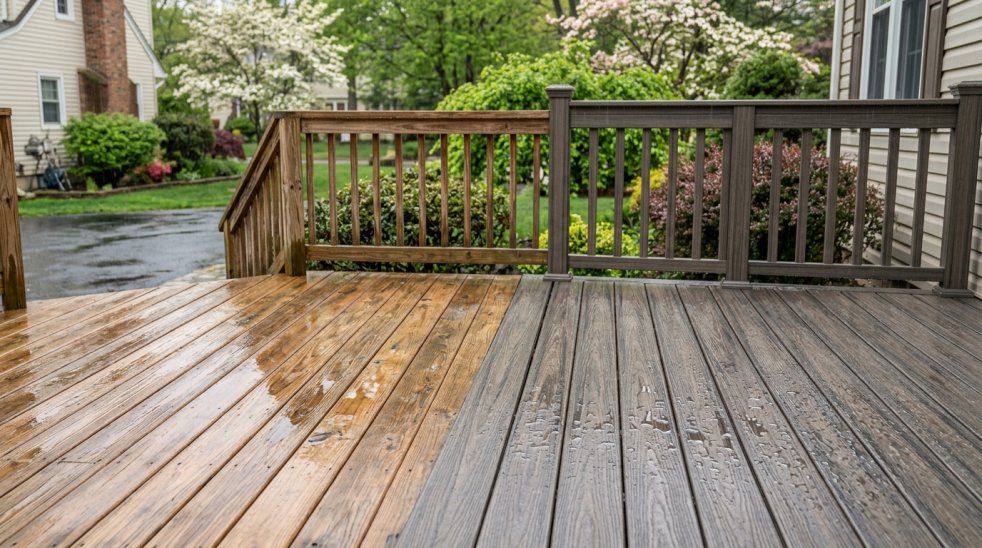
Composite Decking vs Wood for NJ's Wet Spring Weather
Spring in Garfield, NJ, brings something every homeowner knows well: weeks of steady rain, fluctuating temperatures, and ground that stays saturated longer than you'd expect. If you're planning a new deck or replacing an old one, the material you choose will determine how well it holds up through seasons like these.
This guide breaks down the real differences between composite and wood decking so you can make a confident decision before construction begins.
Why NJ's Spring Climate Is Hard on Decking
New Jersey's spring weather is a stress test for outdoor materials. Bergen County, including Garfield, sees significant rainfall from March through May, with temperatures that swing between freezing nights and mild afternoons.
These conditions create a cycle of moisture absorption, expansion, and contraction. Over time, that cycle exposes the weaknesses in whatever material your deck is made from.
- Average spring rainfall in NJ exceeds 12 inches over three months
- Freeze-thaw cycles in March and April put stress on deck fasteners and boards
- Shaded decks stay wet longer, accelerating mold and rot
- High humidity after rain keeps moisture trapped in the wood grain
How Wood Decking Performs in Wet Conditions
Pressure-treated lumber and natural hardwoods like cedar or redwood have been the traditional choice for decades. They look great when new and are widely available. But wood has real vulnerabilities in a wet climate.
Common problems with wood decking in NJ springs:
- Warping and cupping as boards absorb and release moisture repeatedly
- Splintering on the surface as the wood dries out between rain events
- Mold and mildew growth in shaded or low-airflow areas
- Rot at the ends of boards and around fastener holes where water collects
- Staining from iron in wet conditions
To stay ahead of these issues, wood decks require annual sealing or staining, regular cleaning, and periodic board replacement. If maintenance gets skipped even one season, the damage can compound quickly.
How Composite Decking Handles Wet Spring Weather
Composite decking is made from a blend of wood fiber and recycled plastic. That combination makes it far more resistant to the moisture-related problems that affect natural wood.
Key advantages of composite in wet climates:
- Does not absorb water the way natural wood does
- Resists mold, mildew, and rot without chemical treatments
- Holds its shape through freeze-thaw cycles better than lumber
- Does not splinter, making it safer after rain
- Requires no annual sealing or staining
Modern composite products also come with UV-resistant coatings that prevent fading from spring and summer sun. The trade-off is a higher upfront cost, but the reduced maintenance expense over 10 to 20 years often makes it the smarter investment.
Side-by-Side Comparison for Garfield Homeowners
Here is a direct comparison of the two materials across the factors that matter most in NJ's spring climate.
- Moisture resistance: Composite wins clearly over untreated or treated wood
- Maintenance required: Wood needs annual care; composite needs occasional cleaning
- Upfront cost: Wood is less expensive to install initially
- Long-term cost: Composite typically costs less over the life of the deck
- Appearance: Wood has a natural look; composite has improved significantly in recent years
- Lifespan: Composite typically lasts 25 to 30 years; wood averages 10 to 15 years with proper care
- Eco-friendliness: Many composite products use recycled materials
Warning Signs Your Current Deck Is Losing the Battle With Moisture
If you already have a wood deck, spring is the right time to inspect it carefully. Catching problems early can help you decide between repairs and a full replacement.
- Boards that feel soft or spongy underfoot
- Visible gray or black discoloration from mold
- Boards pulling away from the frame or showing gaps
- Rust stains around nail or screw heads
- Peeling or flaking finish after a winter season
- Visible rot at ledger boards or post bases
Any of these signs means the deck is already compromised. A professional inspection will tell you whether targeted repairs make sense or whether replacement is the better call.
Which Material Is Right for Your Project?
The right choice depends on your budget, how much time you want to spend on maintenance, and how long you plan to stay in your home.
If you want a lower upfront cost and are comfortable with annual maintenance, quality pressure-treated wood or cedar can still perform well with the right care. If you want a low-maintenance deck that holds up through NJ's wet springs without constant attention, composite is the stronger long-term choice for most homeowners.
Either way, proper installation matters just as much as the material itself. Improper flashing, poor drainage slope, or inadequate post footings will cause problems regardless of what the boards are made from.
What to Do Next
Before you commit to a material or a design, get a professional assessment of your site, your existing structure (if replacing), and your goals. A contractor who knows Bergen County's climate and soil conditions will give you better guidance than a product brochure ever will.
At Supreme Pro Decks & Construction, we help Garfield homeowners build decks that are designed to last through New Jersey's demanding seasons. Whether you're leaning toward composite or want to explore your wood options, we'll give you honest recommendations based on your specific project.
Call (201) 762-0309 to schedule a free consultation and get a detailed estimate for your deck project this spring.
-Logo.wine.svg)


